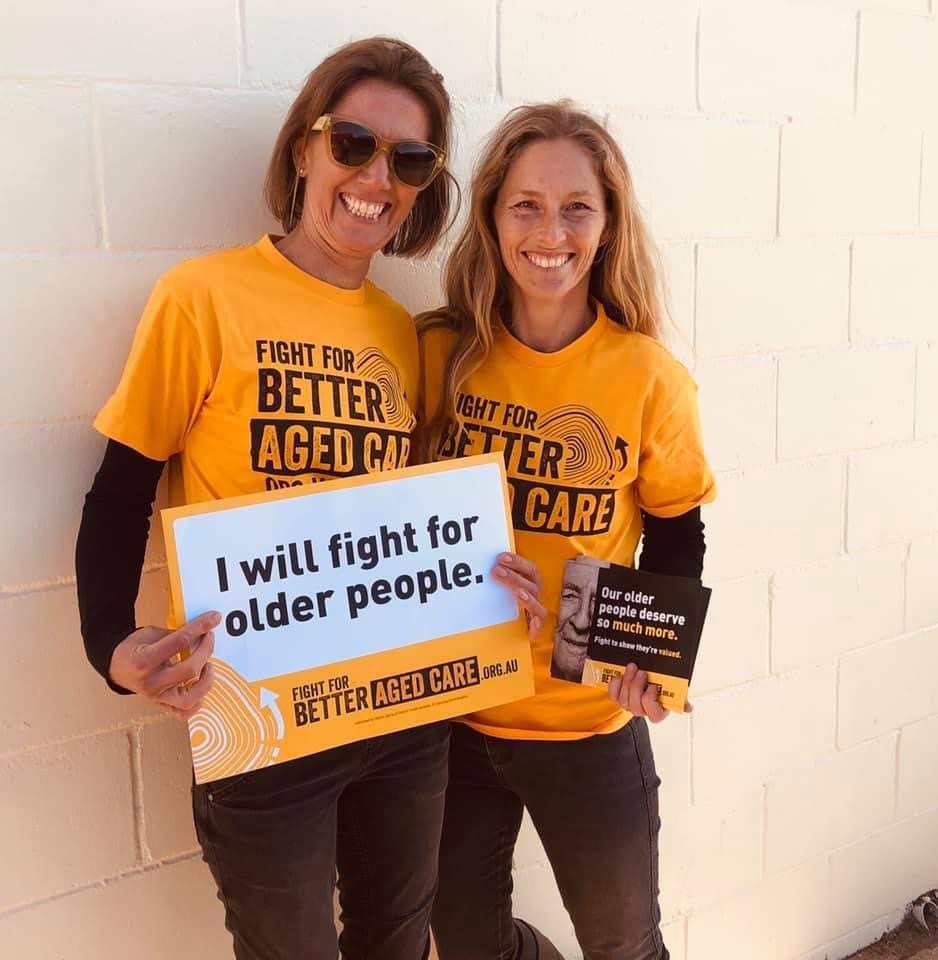
While working with lead advocacy body, Catholic Health Australia, to raise the profile of aged care system reform as a voting priority, I visited marginal electoral seats and voter communities online. I listened to the lived experiences of older people, their families and aged care workers, and my compassion and concern for the health and wellbeing of older people in residential aged care grew.
As a nation, we have affirmed our commitment to the fundamental right of every human “to the enjoyment of the highest attainable standard of physical and mental health’.1 We support the UN Decade of Healthy Ageing and the need to address the priority areas of ageism, age-friendly communities, long-term care, and person-centred approaches.2 Yet these aspirations did not match the picture of mental well-being I encountered in the evidence. The Australian aged care data I reviewed reported that 5 in 10 residents had a diagnosis of depression and nearly 9 in 10 had at least one mental health condition.3 The suicide monitoring data also highlighted the vulnerability of men aged 85 and over in the broader population.4 These findings deepened my concern about the mental health of older people in residential aged care.
Mental illness is not an inevitable or ‘normal’ part of getting old and moving into residential aged care. Following principles of social justice and with health equity as our goal, every older person in care should be supported to achieve optimal mental health and to ‘flourish’ in their later years of life. What would this take? I have reflected on 4 key best practices areas.
Reorienting to a social approach
There has been a move towards rejecting the outdated, disease-focused model of mental health in favour of approaches that target the psychosocial, social and other protective factors underpinning mental wellbeing.6 Imagine if we could reorient mental health care within aged care away from a medicalised model towards a social practice approach - focused on building older people’s sense of self and sense of well-being within the residential home environment. Indeed there are many quality aged care services trying to make this a reality.
Ideally, we would begin this approach from the very moment an older person makes the transition into aged care – to provide support at their most vulnerable time.7 A social practice approach focused on social connection supports could work to overcome the social disconnection caused by moving to aged care. Further this approach would enhance an older person’s mental well-being through enjoyment, friendship, inclusion, purpose and community reconnection.7,8,9,10,11
“We humans are, by nature, social beings: we need each other. In particular, we need the sense of belonging to communities that sustain us, nurture us, support us and protect us and even give us our sense of personal identity” Hugh McKay 12
Community as a resource
Mental health clinicians play a vital role, yet are in short supply. The workforce research I reviewed estimated aged care staff shortages of approximately 60,000 people.13 This is where our communities become an important resource. The R U OK? organisation with its “no qualifications required” public education messaging, reminds us that as human beings we are indeed qualified and capable to show care and offer support for those struggling with their mental health.14 Mental health support programs in aged care that leverage community capacity and resource - intergenerational programs for example - are both practical and effective, and deliver additional benefits back in the form of more cohesive and integrated communities.
Person-centred, strengths based
Aged care residents are diverse. It goes without saying that mental health programs will work best when tailored to the older person – their personal preferences, history, and cultural background, as well as their cognitive and physical abilities, will influence what type of support is appropriate.15 I have gained a deeper appreciation of the power in taking a strengths-based approach to mental health - approaches which recognise the older person’s life experiences as strengths and assets that can be shared and passed onto other generations. I believe taking a strengths-based approach can facilitate longer-term positive mental well-being outcomes by knocking down the ageist perceptions of older people in residential care as “a burden” and raising them back up as deservedly valuable members of society.
Adaptable and local
Often it seems we are looking for health solutions we can scale across populations for maximum impact. The system data I reviewed described a highly fragmented aged care sector, with approximately 845 different organisations providing residential care through more than 2,700 facilities of varying infrastructure.16 We need to be mindful of this setting and develop mental health promotion programs that are flexible, able to be adapted to the specific aged care home as well as the surrounding community resources and partners and operationalised at the local level. The ideal may be to have evidence-based frameworks, initiatives, and toolkits in place for a range of social connection initiatives which can then be adopted and adapted by local residential care and community organisations for implementation.
A commitment to action
These are my personal reflections, gained through research and work in the sector. They have strengthened my commitment to advocate for the health and well-being of our older people. They have also spurred a passion to delve deeper into the more challenging question of how we tackle the structural mental health risk factors of ageism, lack of rights, and the devaluing of older people in our society. Achieving equity in mental and social well-being for older people in the long term will require we both build the protective factors and reduce the risk factors at all levels of society.
References
Source dates are retained below. The figures discussed in this reflection describe the evidence reviewed at the time of writing.
1. UN General Assembly (1966). International Covenant on Economic, Social and Cultural Rights, International Covenant on Civil and Political Rights and Optional Protocol to the International Covenant on Civil and Political Rights, 16 December 1966, A/RES/2200, Accessed at: https://www.ohchr.org/en/instruments-mechanisms/instruments/international-covenanteconomic-social-and-cultural-rights
2. World Health Organisation (WHO)(2020). Decade of Healthy Ageing 2020–2030. World Health Organisation, Geneva, Switzerland. Accessed 13 August 2022: https://www.who.int/initiatives/decade-of-healthy-ageing
3. Australian Institute of Health and Welfare 2020. GEN fact sheet 2018–19: People’s care needs in aged care. Canberra: Accessed at: https://genagedcaredata.gov.au/www_aihwgen/media/Factsheets-for-2019%E2%80%932020-GEN
4. Australian Institute of Health and Welfare 2022. Suicide and Self Harm Monitoring. Accessed at: https://www.aihw.gov.au/suicide-self-harm-monitoring/datahttps://www.aihw.gov.au/getmedia/fef61104-dbe5-4f91-bdb2-fc50f7c55177/Suicide-selfharm-monitoring-Data.pdf.aspx?inline=true
5. Braveman, P. (2017). What is Health Equity?: And What Difference Does a Definition Make?. National Collaborating Centre for Determinants of Health. Available at: http://nccdh.ca/resources/entry/what-is-health-equity-and-what-difference-does-a-definition-make
6. Pemberton, R. and Wainwright, T. (2014). The end of mental illness thinking? International Journal of Clinical and Health Psychology, 14(3), pp.216-220. http://er1.library.unsw.edu.au/er/cgi-bin/eraccess.cgi?url=http://dx.doi.org/10.1016/j.ijchp.2014.05.003
7. Kelly, J., Davison, T. E., & McCabe, M. P. (2022). A psychological needs-based intervention to facilitate adjustment and improve wellbeing in newly admitted aged care residents: three illustrative case studies. Clinical psychologist (Australian Psychological Society), 26(1), 44-52. https://doi.org/10.1080/13284207.2021.1909419
8. Jain, B., Hafford‐Letchfield, T., Ellmers, T., Chandra, C., Billings, B., Teacher, R., O’Farrell Pearce, S., & Clancy, C. (2021). Dog‐assisted interventions in care homes: A qualitative exploration of the nature, meaning and impact of interactions for older people. Health & social care in the community, 29(5), 1450-1460. https://doi.org/10.1111/hsc.13201
9. Hung, L., Liu, C., Woldum, E., Au-Yeung, A., Berndt, A., Wallsworth, C., Horne, N., Gregorio, M., Mann, J., & Chaudhury, H. (2019). The benefits of and barriers to using a social robot PARO in care settings: A scoping review. BMC Geriatr, 19(1), 232-232. https://doi.org/10.1186/s12877-019-1244-6
10. Radford, K., Fitzgerald, J., Vecchio, N., Cartmel, J., & Harris, N., Golenko, X. (2019). The Intergenerational Care Project 2019: Research evaluating an intergenerational learning program in Australia. Griffith University. https://www.intergenerationalcare.org/project-output/toolkit/
11. Kennedy-Behr, A., Rosso, E., McMullen-Roach, S., Berndt, A., Hauschild, A., Bakewell, H., Boshoff, K., Antonello, D., Jeizan, B., & Murray, C. M. (2021). Intergenerational Virtual Program: Promoting Meaningful Connections Across the Lifespan During the COVID-19 Pandemic. Front Public Health, 9, 768778. https://doi.org/10.3389/fpubh.2021.768778
12. Mackay, H. (2019) “A Culture of Compassion”. Australia Day Address 2019. Delivered 23 January 2019. Accessed at:https://www.australiaday.com.au/whats-on/australia-day-address/australia-day-address-2019-by-hugh-mackay-ao/
13. Catholic Health Australia (CHA) (2022). Excess Demand for Nursing and other Professional Services in Hospitals and Aged Care. Prepared by Alastair Furnival, Evaluate & Dr Michelle Campbell, University of Notre Dame Australia. 12 April 2022. Accessed at: https://www.cha.org.au/media-release/cha-report-finds-82156-vacancies-in-hospitals-and-aged-care-urgent-reform-needed/
14. RUOK? (2022). Ask R U OK? No Qualifications Needed. July 13, 2022. Accessed at: https://www.ruok.org.au/no-qualifications-needed
15. Gardiner, C., Geldenhuys, G., & Gott, M. (2018). Interventions to reduce social isolation and loneliness among older people: an integrative review. Health Soc Care Community, 26(2), 147-157. https://doi.org/10.1111/hsc.12367
16. Australian Institute of Health and Welfare (AIHW) (2020). Gen Aged Care Data. Services and places in aged care. 30 June 2020. Accessed at: https://www.gen-agedcaredata.gov.au/Topics/Services-and-places-in-aged-care#:~:text=Across%20Australia%20on%2030%20June,19%20through%203%2C717%20service%20outlets.